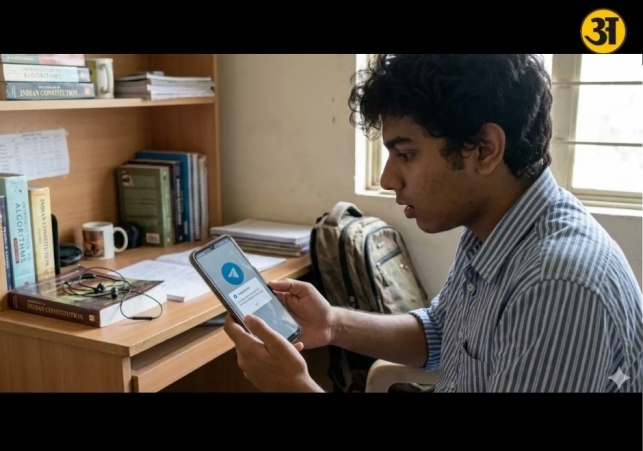
Why Telegram was blocked before NEET re-exam
Telegram blocked before NEET re-exam 2026 as government tightens exam security
Just days before the NEET re-exam 2026, the Indian government blocked Telegram for a short time to stop cheating and fake paper leak claims. The decision has created a lot of discussion among students, parents, and teachers. Many people are asking why Telegram was blocked while apps like WhatsApp and Instagram were not.
The NEET re-exam is scheduled for June 21, and authorities are taking extra steps to make sure the exam is fair and secure. According to the National Testing Agency (NTA), Telegram was being widely used by paper leak gangs and fraud groups to spread fake papers and collect money from students.
Officials said that the move was taken to protect students and stop rumours that could create panic.
Why Telegram was blocked
The main reason for blocking Telegram is one special feature that allows users to edit old messages. This feature can change the content of a message even after it has been sent, while keeping the same old time stamp.
This became a major concern for exam authorities.
Here is how it works. A person can post a normal message on Telegram before the exam. Later, after the exam is over, they can edit that message and upload the real question paper. Since the time stamp stays old, it can look like the paper was leaked before the exam.
This creates false proof of paper leaks.
Authorities said this trick has been used in many exams in recent years. Fake screenshots and edited messages were later spread online to show that papers had leaked. This creates confusion and damages trust in the examination process.
The Ministry of Electronics and Information Technology (MeitY) decided to block Telegram until June 22 to stop such activities during the sensitive exam period.
Another reason is Telegram’s multi-device support.
Unlike many apps, Telegram can be used on several devices at the same time. This means a person can access chats from a phone, tablet, or computer without needing the phone to stay online.
Officials believe this makes it easier for organised cheating groups to operate.
The NTA said many public Telegram channels were openly running under names like “Paper Leaked NEET,” “Re-NEET 2026,” and “Private Mafia.” These channels were asking students and parents for money in exchange for fake promises of exam papers.
The amount demanded ranged from a few thousand rupees to several lakhs.
Authorities believe many innocent students could become victims of such scams.
ALSO READ: Growing vascular disease may be hiding behind common leg pain
ALSO READ: UK defence secretary quits over military funding dispute with Starmer
Why WhatsApp was not blocked
Many people asked why WhatsApp was not banned if it can also spread messages and files.
The answer lies in how the platforms work.
WhatsApp mostly works through private chats and small groups. It does not have the same large public channel system like Telegram. This makes it harder for scammers to reach thousands of people quickly.
Telegram allows anyone to create large public channels where unlimited people can join. This makes it easier for fake paper leak gangs to spread information to a huge number of users in a short time.
Also, WhatsApp does not allow the same easy editing of old messages with files while keeping old time stamps. This feature was seen as one of the biggest risks.
Officials said that recent exam-related scams were mostly linked to Telegram, which is why action was taken against that platform.
The government said the decision was based on intelligence reports and advice from security agencies.
Social media reactions have been mixed.
Some student groups and doctors’ organisations supported the move.
The Federation of All India Medical Association (FAIMA) praised the NTA’s decision. They said exam fairness is very important and students deserve a secure environment.
Many students also agreed, saying strong action is needed to stop paper leaks.
But some people criticised the ban.
They argued that Telegram is only a tool and not the root problem. According to them, the real issue lies in the exam system itself. They said if fraudsters shift to WhatsApp or Instagram, blocking Telegram alone may not fully solve the problem.
One social media user said that if leaks happen through another platform tomorrow, will that also be banned?
This question has started a bigger debate about exam security in India.
Experts believe technology can help both good and bad actors. The focus, they say, should also be on improving internal systems, stronger monitoring, and strict action against leak mafias.
For now, Telegram will remain blocked until the re-exam ends.
The government hopes this step will reduce fake leak claims, stop fraud, and help students focus on preparation instead of rumours.
For lakhs of NEET aspirants, this re-exam is very important for their future.
Authorities have promised strict monitoring, digital surveillance, and stronger security at exam centres.
Students are advised to trust only official updates from NTA and avoid any group or person claiming to sell exam papers.
The message from the government is clear: fair exams matter, and anyone trying to cheat the system will face action.
Related News